

Project Description
Product List: Shoe Machine Shoe Mould Shoe Accessories
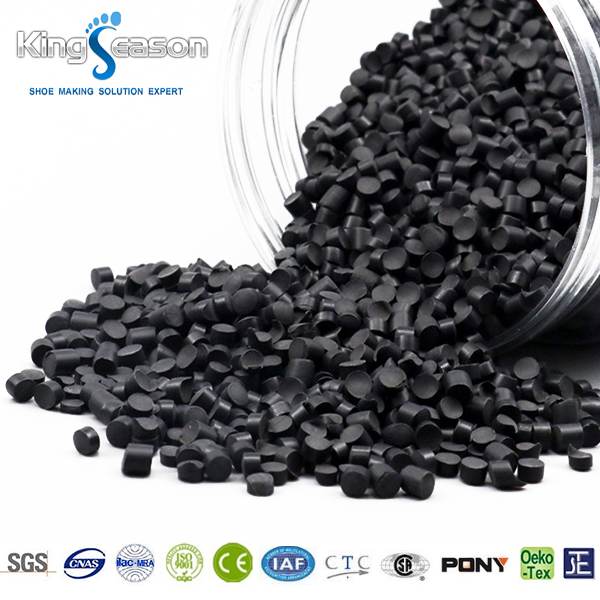
PVC MATERIAL
Our factory is the first company specializde in producting safety shoes material in China.
Our main products are steel toe cap,aluminium toe cap,plastic toe cap,steel insole…
Product characteristics
| Flame retardant (flame retardant value above 40), high chemical resistance (concentration resistant to concentrated hydrochloric acid, 90% sulfuric acid concentration, 60% nitric acid concentration and 20% sodium hydroxide concentration) |
Properties of PVC materials
| Density 1380 kg/m3 |
| Tensile strength (σt) 50-80 MPa |
| Elongation @ break 20-40% |
| Notch test 2-5 kJ/m2 |
| Glass transition temperature 87℃ |
| Melting point 212℃ |
| Vicat B1 85℃ |
| Thermal conductivity (λ) 0.16 W/m.K |
| Coefficient of thermal expansion (α) 8 10-5 /K |
| Heat capacity (c) 0.9 kJ/(kg·K) |
| Water absorption rate (ASTM) 0.04-0.4 |
Injection molding process conditions
| Drying treatment: Usually no drying treatment is required. |
| Melting temperature: 185~205C Mold temperature: 20~50C |
| Injection pressure: can be as large as 1500bar Holding pressure: can be as large as 1000bar Injection speed: In order to avoid material degradation, generally a relatively fast injection speed is used. |
| Runners and gates: All conventional gates can be used. If processing smaller parts, it is best to use pin-point gates or submerged gates; for thicker parts, it is best to use fan gates. The minimum diameter of the pin-point gate or submerged gate should be 1mm; the thickness of the fan gate should not be less than 1mm. |
| Typical uses: water supply pipes, domestic pipes, house wall panels, commercial machine housings, electronic product packaging, medical equipment, food packaging, etc. |
PVC performance and identification
| The combustion characteristics of polyvinyl chloride are: flame retardant, extinguish from fire, yellow flame, white smoke, plastics become soft and irritating when burning. |
| ⒈Physical properties Polyvinyl chloride resin is a thermoplastic with amorphous structure. Under ultraviolet light, hard PVC produces light blue or purple-white fluorescence, while soft PVC emits blue or blue-white fluorescence. When the temperature is 20℃, the refractive index is 1.544, the specific gravity is 1.40, and the density of products with plasticizer and filler is usually in the range of 1.15~2.00, the density of flexible PVC foam is 0.08~0.48, and the rigid foam is 0.03. ~0.08. PVC water absorption rate is not more than 0.5%.The physical and mechanical properties of PVC depend on the molecular weight of the resin, the content of plasticizer and filler. The larger the molecular weight of the resin, the higher the mechanical properties, cold resistance, and thermal stability, but the processing temperature is also high, and the molding is more difficult; the lower molecular weight is the opposite of the above. The filler content increases and the tensile strength decreases. |
| ⒉ Thermal performance The softening point of PVC resin is close to the decomposition temperature. It has begun to decompose at 140°C, and decomposes more rapidly at 170°C. In order to ensure the normal progress of the molding process, the two most important process indicators for the polyvinyl chloride resin are specified, namely the decomposition temperature and thermal stability. The so-called decomposition temperature is the temperature when a large amount of hydrogen chloride is released, and the so-called thermal stability is the time when a large amount of hydrogen chloride is not released under a certain temperature condition (usually 190°C). Polyvinyl chloride plastics will be decomposed for a long time when exposed to 100℃, unless alkaline stabilizers are added, they will decompose quickly if they exceed 180℃. The long-term use temperature of most PVC plastic products should not exceed 55℃, but the long-term use temperature of specially formulated PVC plastics can reach 90℃. Soft PVC products will become hard at low temperatures. Polyvinyl chloride molecules contain chlorine atoms, so it and its copolymers are generally flame and flame resistant, self-extinguishing, and no dripping. |
| ⒊ Stability Polyvinyl chloride resin is a relatively unstable polymer, which will also degrade under the action of light and heat. The process is to release hydrogen chloride and the structure changes, but to a lesser extent. At the same time, it will accelerate decomposition in the presence of mechanical force, oxygen, odor, HCl and certain active metal ions. After removing HCl from the polyvinyl chloride resin, a conjugated double-strand was produced in the main chain, and the color also changed. As the amount of hydrogen chloride decomposition increases, the PVC resin changes from the original white to yellow, rose, red, brown or even black. |
| ⒋Electrical performance The electrical properties of PVC depend on the amount of residues in the polymer, the type and amount of various additives in the formulation. The electrical properties of PVC are also related to the situation of heating: when heating decomposes PVC, its electrical insulation is reduced due to the presence of chloride ions. If a large amount of chloride ions are generated, it cannot be neutralized by alkaline stabilizers (such as lead salts). Will cause its electrical insulation performance to decline significantly. PVC is not like nonpolar polymers such as polyethylene and polypropylene. Its electrical properties change with frequency and temperature. For example, dielectric constant decreases with increasing frequency. |
| ⒌Chemical properties Polyvinyl chloride has very good chemical stability and is extremely valuable as a corrosion-resistant material. PVC is stable to most inorganic acids and alkalis, and is not dissolved when heated and is explained as hydrogen chloride. Azeotrope with potassium hydroxide produces a brown insoluble unsaturated product. The solubility of PVC is related to the molecular weight and polymerization method. Generally speaking, the solubility decreases as the molecular weight of the polymer increases, and the emulsion method resin has poorer solubility than the suspension method resin. It can be dissolved in ketones (such as methylhexanone, cyclohexanone), aromatic solvents (such as toluene, xylene), dimethylformyl, tetrahydrofuran. Polyvinyl chloride resins are almost insoluble in plasticizers at room temperature, and swell significantly or even dissolve at high temperatures. |
| ⒍Processing performance PVC is an amorphous high polymer with no obvious melting point. It has plasticity when heated to 120-150℃. Due to its poor thermal stability, a small amount of HCl is emitted at this temperature to promote its further decomposition, so it is necessary to add an alkaline stabilizer and HCl to inhibit its catalytic cracking reaction. Pure PVC is a hard product, and it needs to add an appropriate amount of plasticizer to make it soft. For different products, it needs to add additives such as ultraviolet absorbers, fillers, lubricants, pigments, mildew inhibitors, etc. to improve the quality of PVC products. Use performance. Like other plastics, the performance of the resin determines the quality and processing conditions of the product. For PVC, the resin properties related to processing are: particle size, thermal stability, molecular weight, fisheye, bulk density, purity and foreign impurities, porosity. For PVC paste and paste viscosity and gelation performance, it should be determined to determine the processing conditions and product quality. |
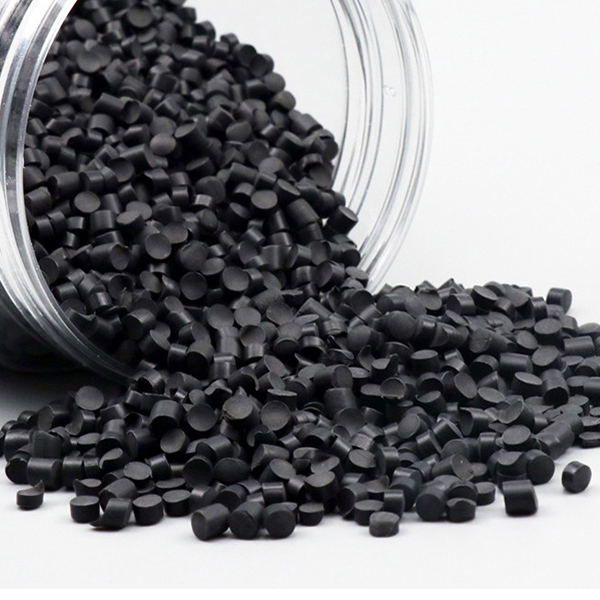
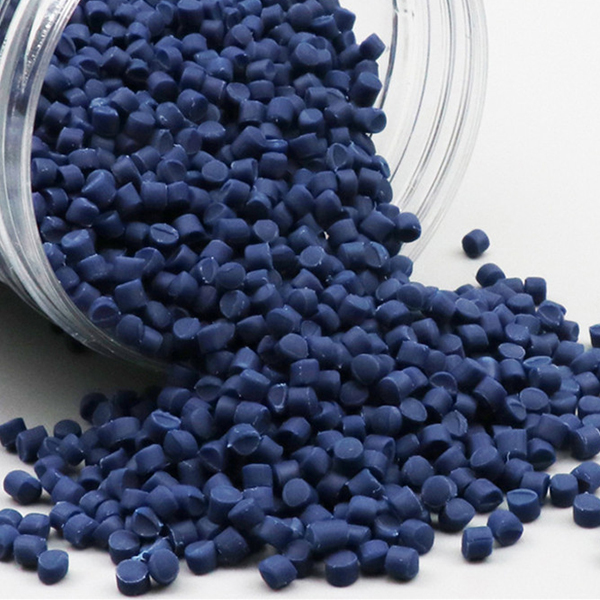
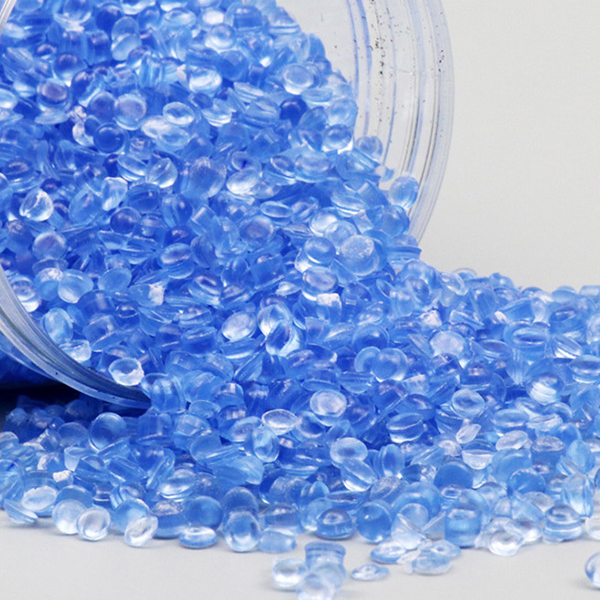
Product picture
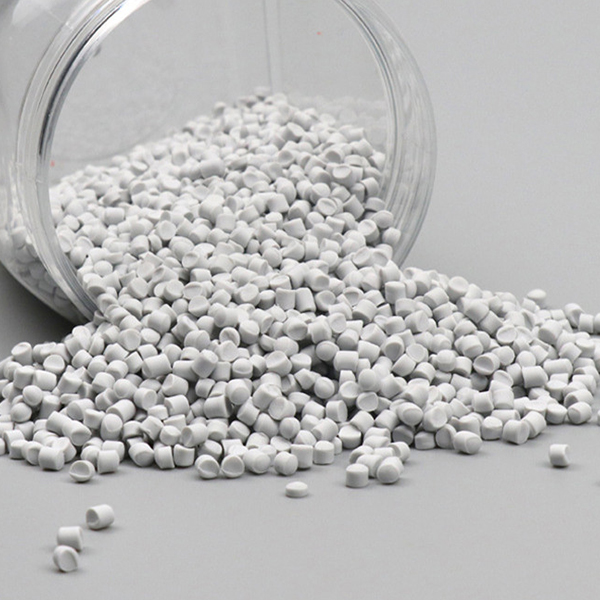
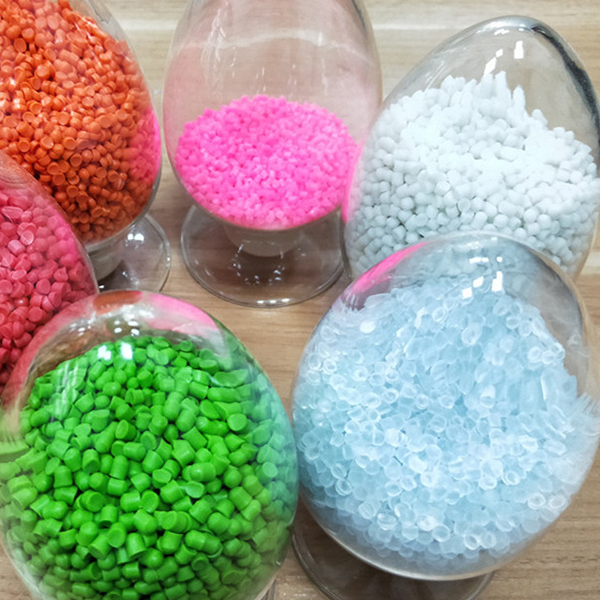
WE ARE HERE TO HELP
If you still have any questions, please email us at info@kingseason.com
We respond to every email within 24 hours! We will be happy to help you.